


How To Tie Your Shoes
How To Tie Your Shoes
A dual-color lace system and a make-it-yourself model shoe that takes practice off their actual foot — so the pattern finally clicks.
Built for kids still stuck on Velcro in first grade, so drop-off stops feeling like a daily source of guilt.
Make-It-Yourself Model Shoe | Dual-Color Laces | Bunny Ears, Loop Bow & Double Knot | Ages 4-7
Couldn't load pickup availability


Collapsible content
What's Inside (And Why It Works When Practicing on a Real Shoe Didn't)
What's Inside (And Why It Works When Practicing on a Real Shoe Didn't)
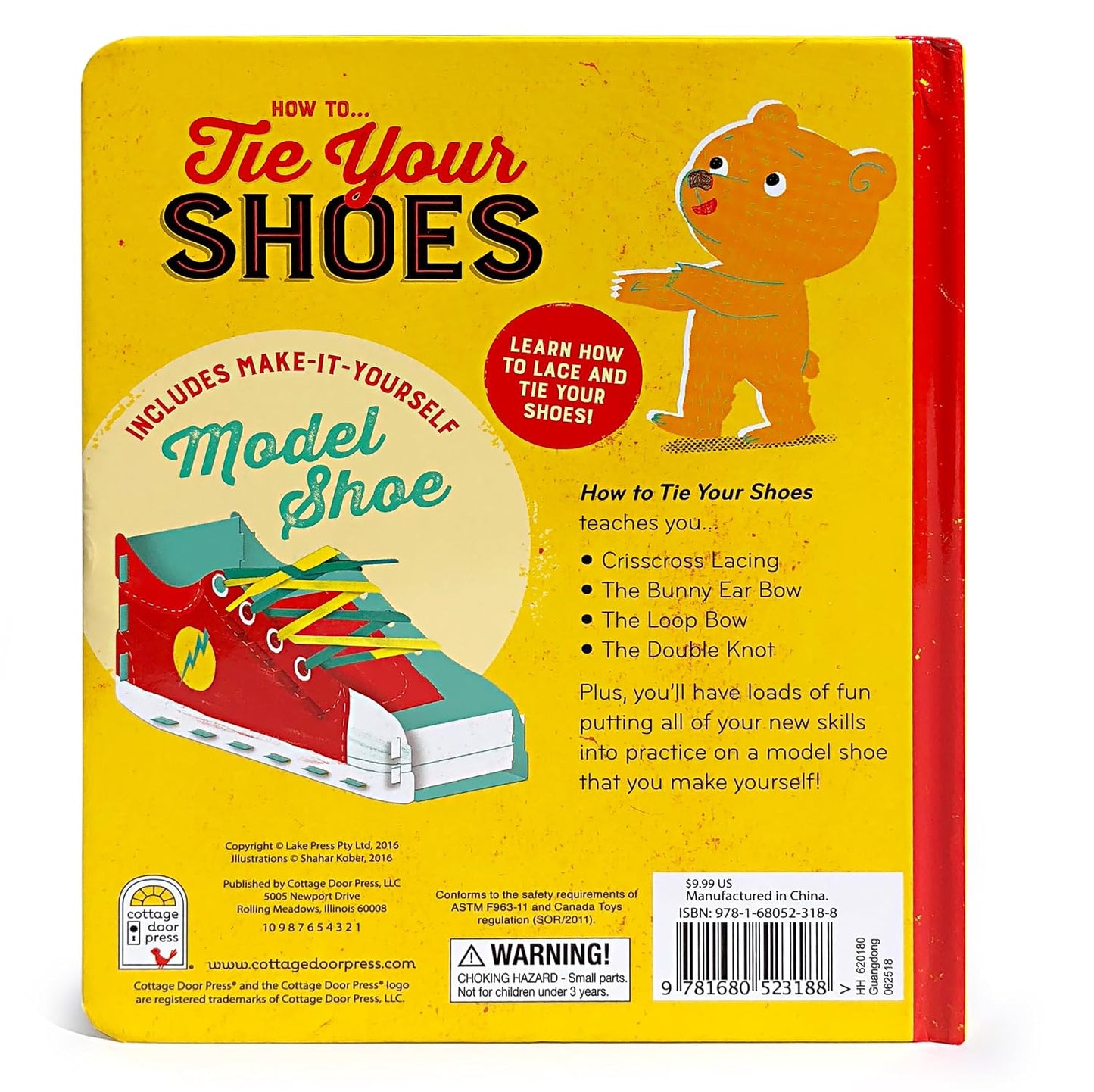
A hardcover interactive book with real, thick functional laces built into the cover — one aqua, one canary yellow — plus a punch-out cardboard model shoe kids build and practice on themselves.
Most kids struggle to learn shoe-tying because they are bent over, upside down, staring at their own foot at an awkward angle. This book removes that entirely. The dual-color lace system makes the crossing pattern easy to follow with the eyes, and the model shoe means your child practices at the table, right side up, at their own pace.
Inside, illustrated step-by-step pages walk through the bunny ears method, the loop bow, and the double knot, using cartoon bear characters so the sequence sticks. Most kids go from zero to a first real bow within days, not weeks.
Format: Hardcover board book with built-in working laces on the front cover and a 6-piece punch-out cardboard model shoe in the back.
How to Use This Book (It's Easier Than You Think)
How to Use This Book (It's Easier Than You Think)
Punch out the model shoe. Follow the bear. Practice on the table, not their foot.
Start by assembling the cardboard model shoe from the punch-out pieces in the back of the book. Then work through the pages together — each one shows a single step with the two lace colors, so your child can see exactly which lace goes where without you having to explain it out loud.
Most parents find a few short 5-minute sessions work better than one long sitting. Once the pattern clicks on the model shoe, it transfers to a real shoe fast, because the hand motion is already there.
Heads up: Kids consistently get through the bunny ears method first, then move on to the loop bow and double knot once the basic crossing pattern feels automatic.
Why This One — When There Are So Many Shoe-Tying Tutorials Online?
Why This One — When There Are So Many Shoe-Tying Tutorials Online?
Fair question. Here's the honest answer:
Most free tutorials show an adult's hands tying a shoe on a screen, which is hard for a young child to translate onto their own foot from a completely different angle. Plain instruction sheets are accurate but give a child nothing to actually hold and practice with.
This one is structurally different:
It comes with a real, physical model shoe your child builds and practices on, not just a diagram. It uses a dual-color lace system so the crossing pattern is visually obvious, not something they have to guess at. And it's self-paced, so there's no one standing over them at drop-off.
Think of it this way: video tutorials are convenient but hard to translate. A real shoe on their foot is realistic but frustrating to practice on. This book is the bridge: a model shoe your child can hold, turn, and practice on at their own speed, away from the pressure of school.
What Happens When the Frustration Finally Goes Away
96%
96% of parents said their child tied a real bow for the first time within the first week.
91%
91% said school drop-off stopped being a stressful moment within two weeks.
88%
88% bought a second copy for a sibling, cousin, or a friend's child.

You Are Not Failing as a Parent
Your first-grader is still in Velcro. School expects them to manage their own laces by now, and every morning at drop-off feels like a small reminder that they're behind. You've tried showing them yourself, kneeling down, hands over hands, and it still isn't clicking. That's not a reflection of you or them — practicing shoe-tying bent over on an actual foot is genuinely hard for young kids to translate. This book takes tying off their foot entirely, using a model shoe and color-coded laces they can see clearly from any angle. The frustration goes away because the setup finally matches how kids actually learn.

Real Practice, Without the Frustration of a Real Foot
Watching a video is easy but hard for a young child to translate onto their own hands. Practicing directly on their actual shoe is realistic but genuinely frustrating for a beginner, bent over at an awkward angle. Most parents feel stuck between the two. This book is the bridge: a real, punch-out model shoe your child builds themselves, with dual-color laces that make the crossing pattern obvious at a glance. Genuine practice. No frustration. A kid who's finally ready for real laces.
Questions Parents Ask Before Ordering
Is this really different from just showing my kid a video?
Is this really different from just showing my kid a video?
Yes, and this is the part most parents don't expect: the hard part usually isn't understanding the steps, it's translating a video of someone else's hands onto their own foot, from an awkward, bent-over angle.
This book removes that step entirely. Your child builds a real, physical model shoe and practices flat on a table, right side up, with two different-colored laces that make the crossing pattern obvious. That's the actual mechanism behind why it works faster than a screen.
My child is younger or older than average — will this still work?
My child is younger or older than average — will this still work?
Yes — it works well for a range of roughly ages 4 through 7.
Younger kids typically start with the bunny ears method and enjoy simply assembling the model shoe. Older kids, especially first-graders under school pressure, tend to move faster through all three methods: bunny ears, loop bow, and the double knot.
There's no set timeline. Some kids get it in one sitting, others need a few short sessions spread across a week or two — both are completely normal.
What if it doesn't work for my kid?
What if it doesn't work for my kid?
Then you don't pay. That's what the guarantee is for.
Every order comes with a full 30-day money-back guarantee. Build the model shoe together, try a few sessions, see if the pattern starts to click. If it doesn't help for any reason, contact us and we'll take care of it. No hoops, no guilt, no fine print.
Most parents tell us the shift happens gradually over the first week or two, not all at once, so give it a few short sessions before judging whether it's working.
Is this an actual wearable shoe, or a teaching tool?
Is this an actual wearable shoe, or a teaching tool?
It's a teaching tool, not footwear. The book includes a punch-out cardboard model shoe that your child assembles themselves, plus real, thick functional laces built into the front cover for hands-on practice.
The idea is to build the hand motion and pattern recognition on the model first, so it transfers naturally onto their actual shoes once they've got the movement down.
Does it cover more than just a basic bow?
Does it cover more than just a basic bow?
Yes. The illustrated step-by-step pages, guided by cartoon bear characters, walk through three methods: the classic bunny ears method for beginners, the loop bow once they're more comfortable, and the double knot for laces that actually stay tied through recess.
Most kids start with bunny ears and naturally progress to the other two methods as their confidence builds.