
5 Things Preceptors Notice Right Before a New CVICU Nurse Almost Quits
5 Things Preceptors Notice Right Before a New CVICU Nurse Almost Quits

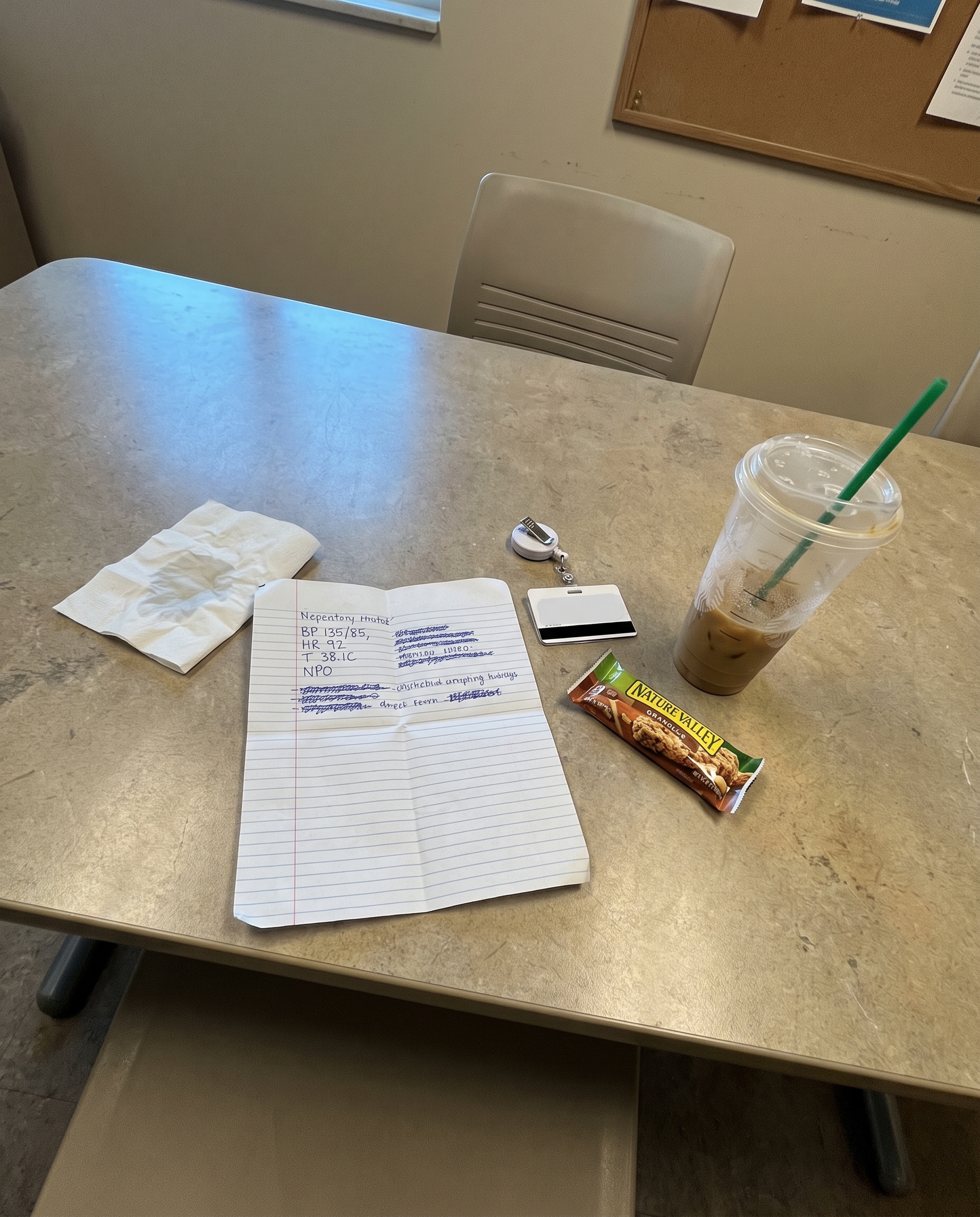
I've precepted in the cardiac ICU for nine years. I've trained a lot of new nurses. And I've learned there's a very specific pattern that shows up right before you lose one — weeks before they ever say a word about quitting.
Here's what I actually watch for now. Not because I want to catch someone failing. Because I want to catch it early enough to do something about it.
The Notes Get Longer and the Questions Get Shorter
Early on, orientees ask a lot. That's normal and it's good. The ones I worry about are the ones who stop. Not because they've got it — because they've decided asking makes them look behind.
I had an orientee twelve weeks in who used to write everything on a folded piece of paper — vitals, drip rates, Swan numbers — cross it out, rewrite it, ask me the same thing three different ways hoping the answer would change. Week one she'd ask before I finished a sentence. Week eight she stopped asking anything at all.
That silence is not competence. It's someone quietly deciding they're too far behind to admit it.
They Can Recite the Number But Can't Explain the Patient

You can ask a struggling orientee what a normal SVR is and they'll rattle it off correctly. Ask them to look at a real patient's numbers and tell you what's actually happening physiologically, and it falls apart. That gap — memorized numbers with no picture attached to them — is the loudest early warning sign there is.
I had an orientee three weeks ago ask me if she should transfer to step-down. Last week I watched her explain aortic stenosis hemodynamics to a resident, unprompted, correctly, in her own words. I'm still not over it. The difference wasn't more repetition. It was something finally giving her the picture instead of the paragraph.
Read the Signs You're Struggling →They Go Quiet in Corners and Come Back Different
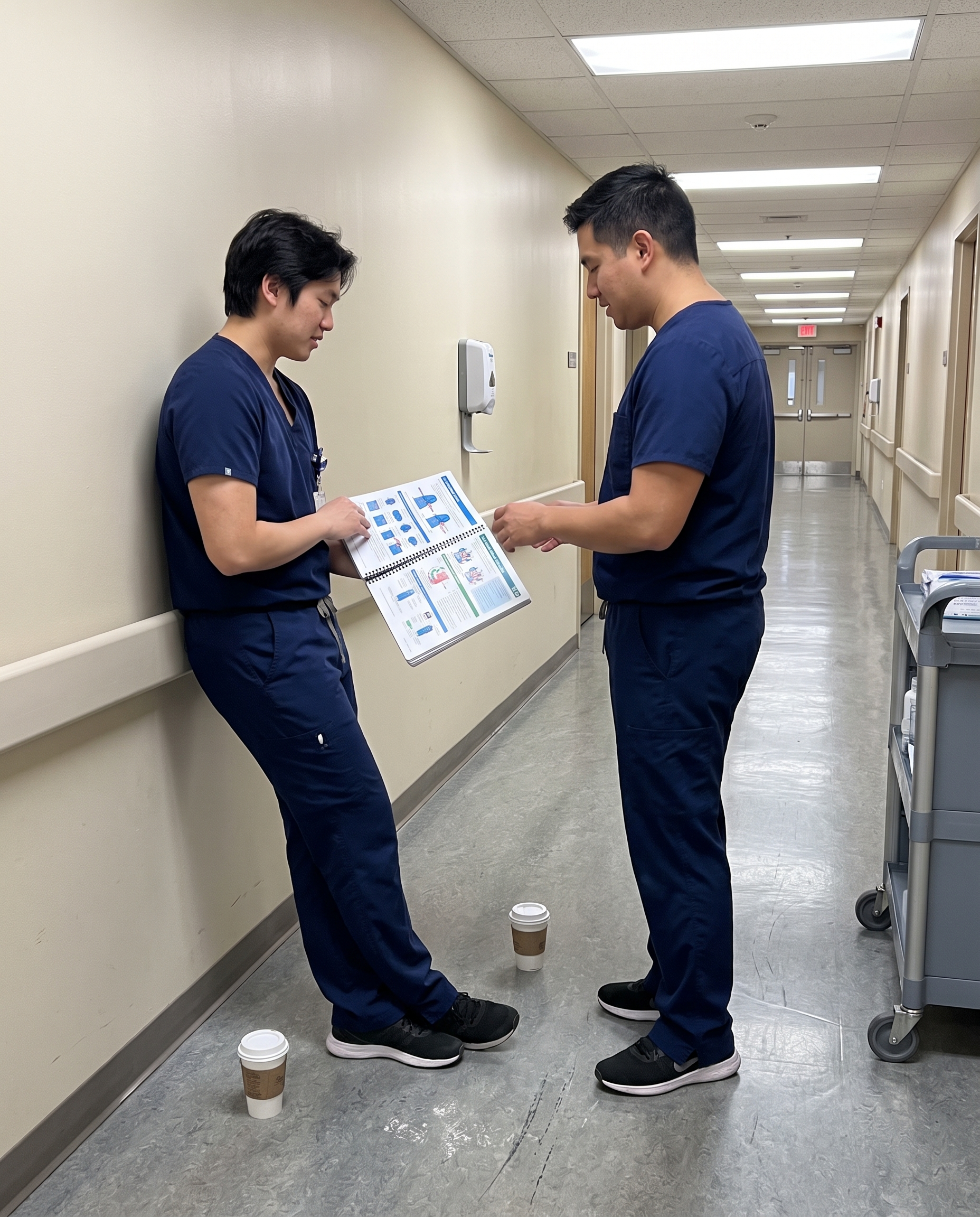
We have a nurse on our unit — quiet, did his work, never volunteered anything on rounds. I thought he was shy. He wasn't. He told me later he'd go home every night and read the same hemodynamics chapter three times and still couldn't explain it back to himself. He said it felt like reading English without understanding the language.
Two months ago I walked past the corridor and heard his voice. He was standing with a new orientee, holding a book open to a diagram, explaining the difference between cardiogenic and distributive shock — in his own words, pointing at the picture, like he'd known it for years. This is a man who four months earlier wouldn't make eye contact during report.
Something clicked for him. And it wasn't more willpower. It was finally seeing the thing instead of memorizing words about it.
The Improvement Plan Meeting Becomes the Breaking Point
This is the one that should scare every preceptor. By the time it gets to a formal conversation about lack of progress, you've usually already lost them — not because the feedback was wrong, but because nobody caught the gap early enough to close it before it became a paper trail.
The nurses who turn around are the ones who get the right resource before that meeting happens. Not after.
See the Full List of Warning Signs →Then, Sometimes, It Actually Turns Around — and It's Never Willpower

I've watched this exact turnaround happen more than once now, and it always follows the same shape. Someone hands the struggling nurse a resource that shows the concepts instead of describing them — a visual guide, color-coded, built specifically for cardiac critical care. Within days, not weeks, something changes. They stop nodding and start explaining. They stop hiding and start asking real questions again.
It's called A Visual Guide to Cardiac Critical Care, written by a cardiac surgery PA-C who's trained staff for this exact environment. Swan-Ganz interpretation, hemodynamic profiles, IABP timing, Impella, ECMO, LVADs, pressors — all of it as a picture you can actually hold onto, not a paragraph you have to decode under pressure.
The Nurses Who Stay Aren't the Toughest Ones. They're the Ones Who Got the Right Tool in Time.
I don't precept to weed people out. I precept to keep good nurses in the specialty they were built for. If you're watching someone on your unit go quiet, or you're the one going quiet yourself, the fix usually isn't more grit. It's getting the information into a format that actually sticks before the gap turns into a resignation.
A Visual Guide to Cardiac Critical Care
 Grab a Copy →
Yes. Many preceptors buy copies for every new orientee on their unit as a standard part of onboarding. It's designed to be handed off, not just self-purchased.
No. It's built to sit alongside orientation, not replace it. It gives orientees a visual reference for concepts your program is already teaching, so the information sticks faster.
Most report a noticeable shift within days of the orientee reading it — fewer blank stares in report, more unprompted questions and explanations.
Yes. Balloon pumps, Impella waveforms and P-levels, VA and VV ECMO, Harlequin syndrome, and LVAD are all covered visually.
All of them. CVICU, CICU, CCU, CTICU. The hemodynamics, drips, and mechanical support content applies across every cardiac critical care unit.
Yes, simply adjust the quantity at checkout. Many preceptors order in bulk for their whole cohort.
You're covered by a 30-day money-back guarantee. If it doesn't click for your orientee, reach out and we'll make it right.