
The Preceptor Near-Miss Story: What Almost Went Wrong in Week 8
My Preceptor Got Written Up for "Instilling Fear." Three Weeks Later I Watched Her Almost Push 200mcg/min of Levo Into a Man Whose Pressure Was Already in the 180s.
I'm 24. I finished orientation eleven weeks ago. I work nights in a 20-bed CVICU, and I want to tell you about week 8 — not the day I got my badge, the day my preceptor got pulled into a meeting for "instilling fear" in a new nurse.
That new nurse wasn't me. I never reported her. I was the one standing at the pole when it almost went wrong.
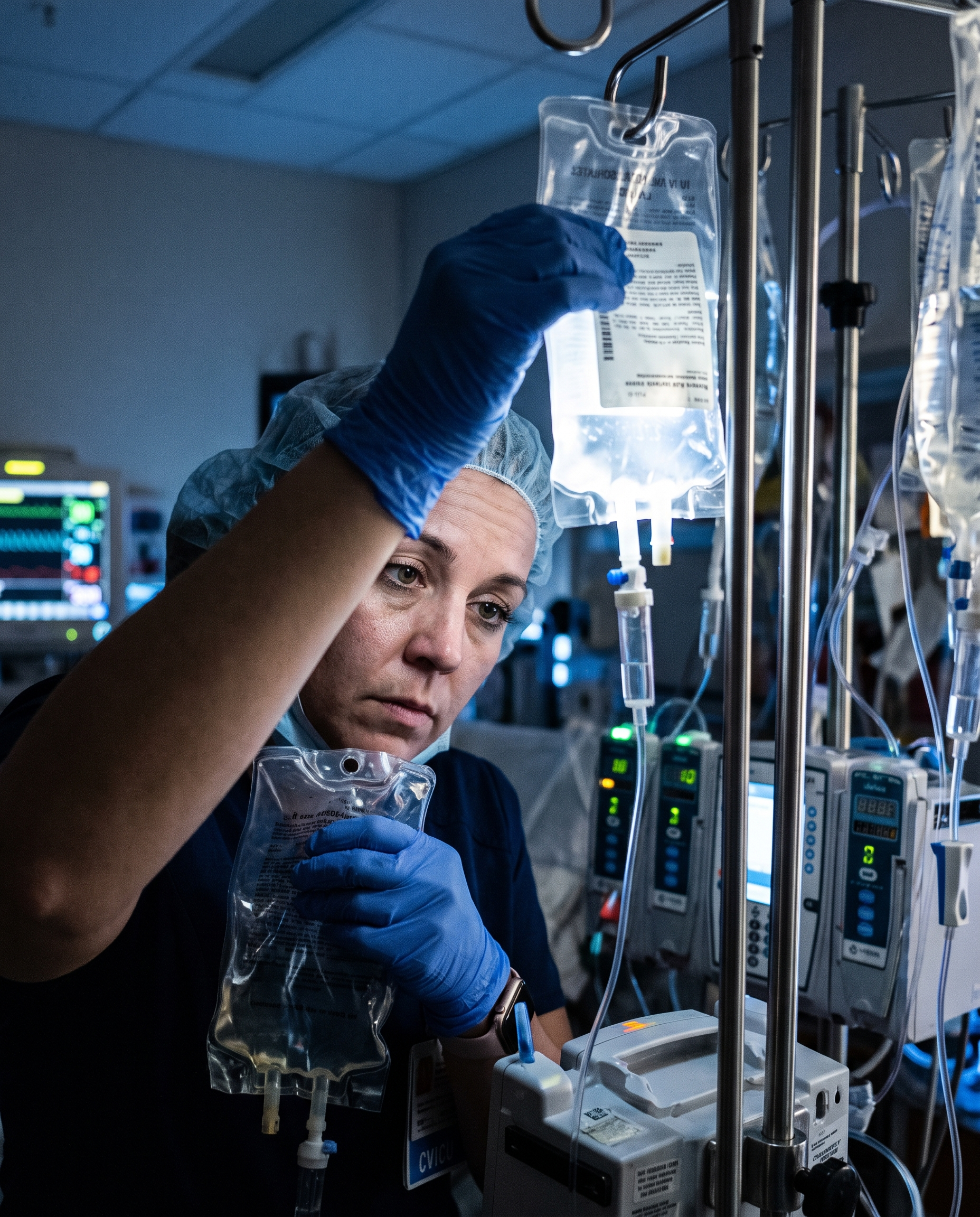
We had a neuro patient storming — blood pressure bouncing between two drips depending on which system was winning that hour. The cardene bag ran dry. I grabbed a new bag off the shelf. I didn't scan it. I didn't read the label out loud the way we're taught in orientation and then quietly stop doing by week 6, because everyone's in a hurry and nobody's watching that closely anymore.
It was levophed. I was about ninety seconds from starting norepinephrine, unscanned, into a hypertensive crisis, at a rate that would have made his pressure so much worse it isn't a hypothetical anymore — it's a code.
My preceptor caught it. Not because of a system. Because she happened to look up. I cried in the med room for four minutes. Then I went back out and finished the shift, because that's the job.
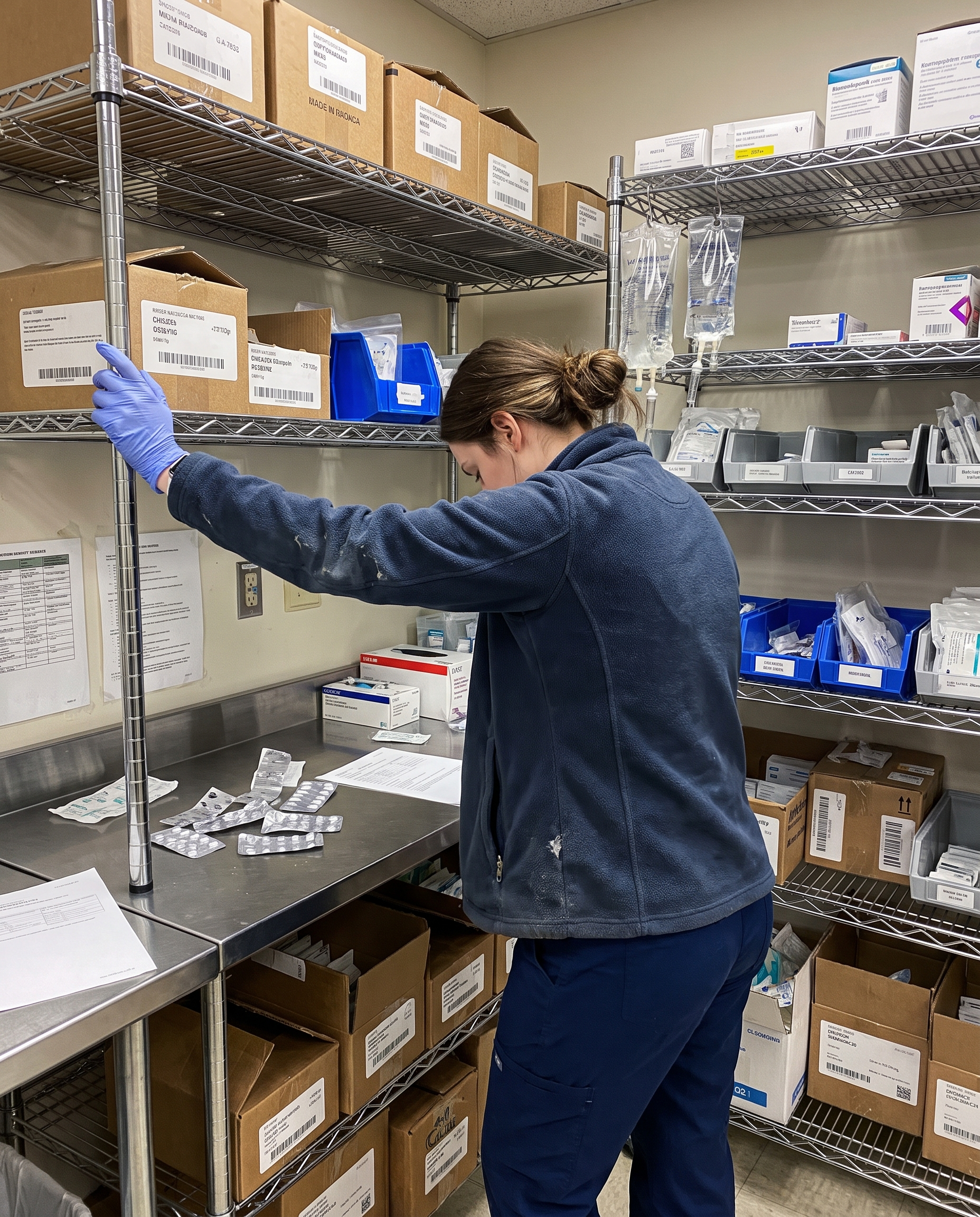
Here's the part I actually want to tell you about. The next morning, before I'd even left the parking garage, I found out she'd been pulled into a meeting — not about the near-miss, about her tone. Somebody had decided, secondhand, that what I needed was to feel safe, not to feel the size of what had almost happened.
My preceptor never precepted again after that year. She told me the extra $0.50/hr "wasn't worth it anymore." I've thought about that sentence more than almost anything else from orientation.
Nobody sat me down afterward and taught me the why. There wasn't time. There's never time. The gap in my understanding just travelled with me — quietly, waiting for the next dry bag.
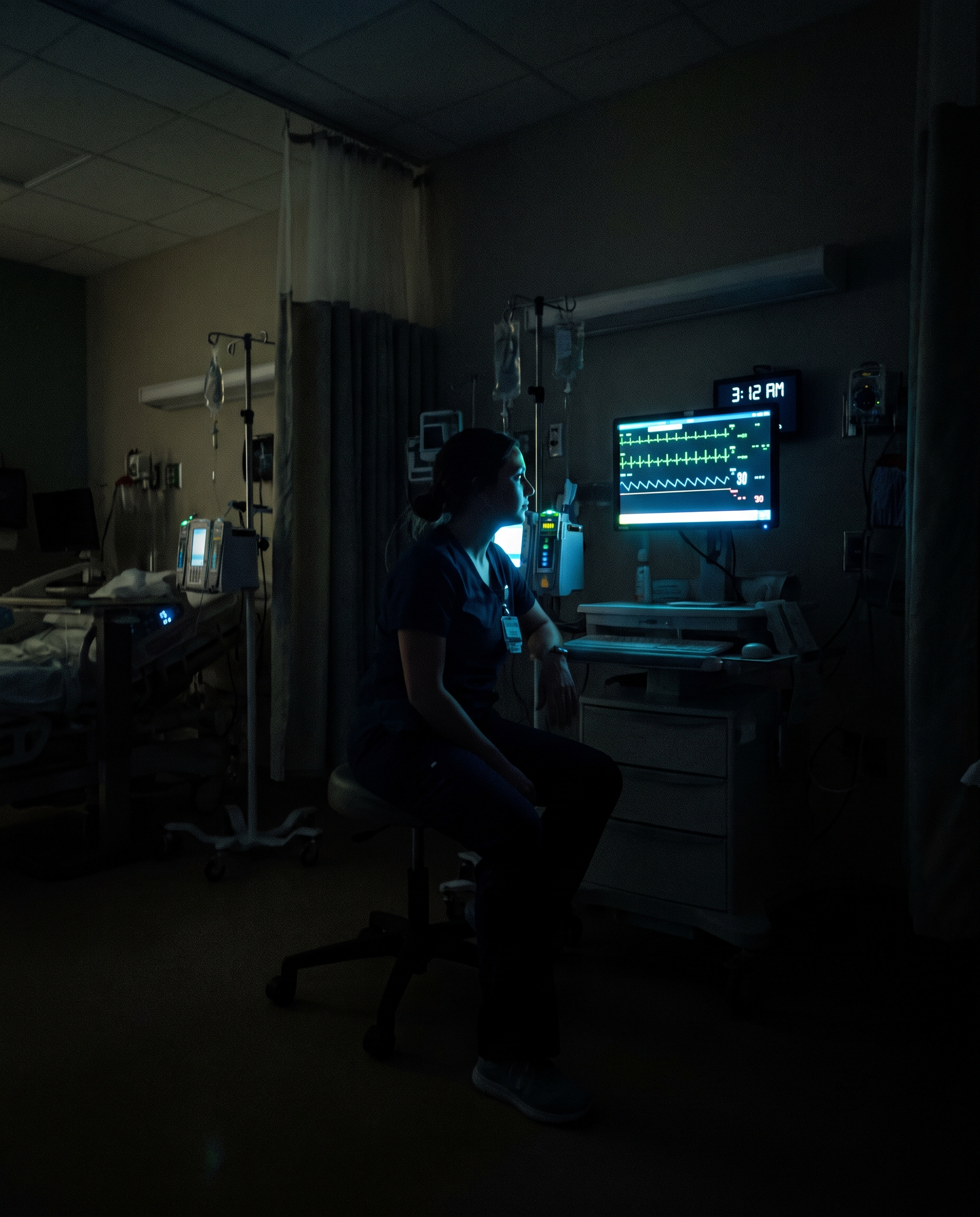
What actually closed that gap wasn't a class. It was a spiral-bound book a nurse two years ahead of me had on her rolling cart — A Visual Guide to Cardiac Critical Care. Not written by a nurse. Written by a cardiac surgery PA who'd spent years watching the exact moment nurses either get it or don't — Impella waveforms, Swan numbers, IABP timing — shown, waveform next to waveform, not explained in paragraphs you skim at 2am.
Three weeks after I bought my own copy, I had another neuro storming patient. Another dry pressor bag. Same exact setup as the night that almost went wrong. I looked at the new bag before I spiked it. Out loud, the way we're supposed to. Not because a policy told me to — because somewhere in the space between knowing the steps and understanding what they're for, something had actually closed.
A Visual Guide to Cardiac Critical Care
Impella waveforms, Swan-Ganz hemodynamics, IABP timing, ECMO mechanics, EKG coronary territories, and cardiogenic shock — shown the way you actually need to see it at 3am.
See the Guide — $59.99P.S. — I asked the nurse who lent it to me why she had it in the first place. She said her own preceptor told her, on day one, "learn the waveforms before you learn the drips, because the drips will make sense once the waveforms do." I don't think I'll forget that either.
P.P.S. — My preceptor, if you ever read something like this: I know it wasn't me. I hope wherever you are, someone let you keep teaching.