
Why the Cardiac ICU Follows You Home
Why the Cardiac ICU Follows You Home (And the One Thing That Finally Let Me Leave It at the Door)

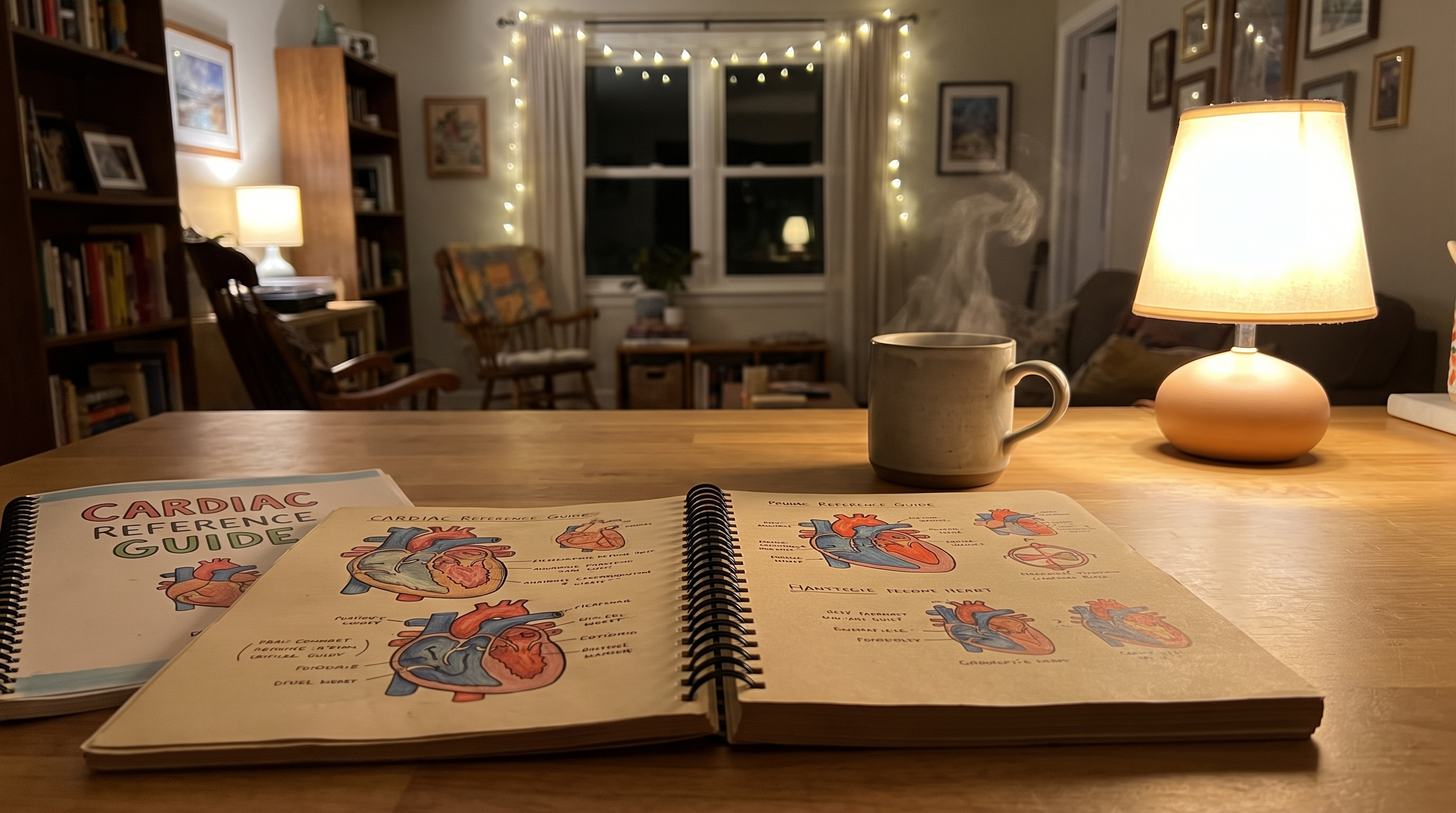
Everybody warns you that the cardiac ICU is hard while you are there. Nobody warns you that it comes home with you.
It follows you into the shower you stand in a little too long, replaying the question you could not answer. It rides home in the car that has quietly turned into a second breakroom. It lies in bed with you at 2 PM while the sun leaks around the blackout curtains and your brain runs the same Swan numbers on a loop. It sits on the couch four feet from the person you love while you disappear into a 600 page textbook you are not really absorbing.
If any of that sounds like you, you are not weak and you are not doing it wrong. This is what the first year in critical care actually feels like for a lot of us, and almost nobody says it out loud.
The part that makes it worse: you are already trying so hard
This is the thing that used to break me. It was not that I was lazy. I was studying constantly. Days off, nights before shifts, in the parking garage, in bed. Textbooks, videos, flashcards, whatever a stranger on Reddit swore by that week.
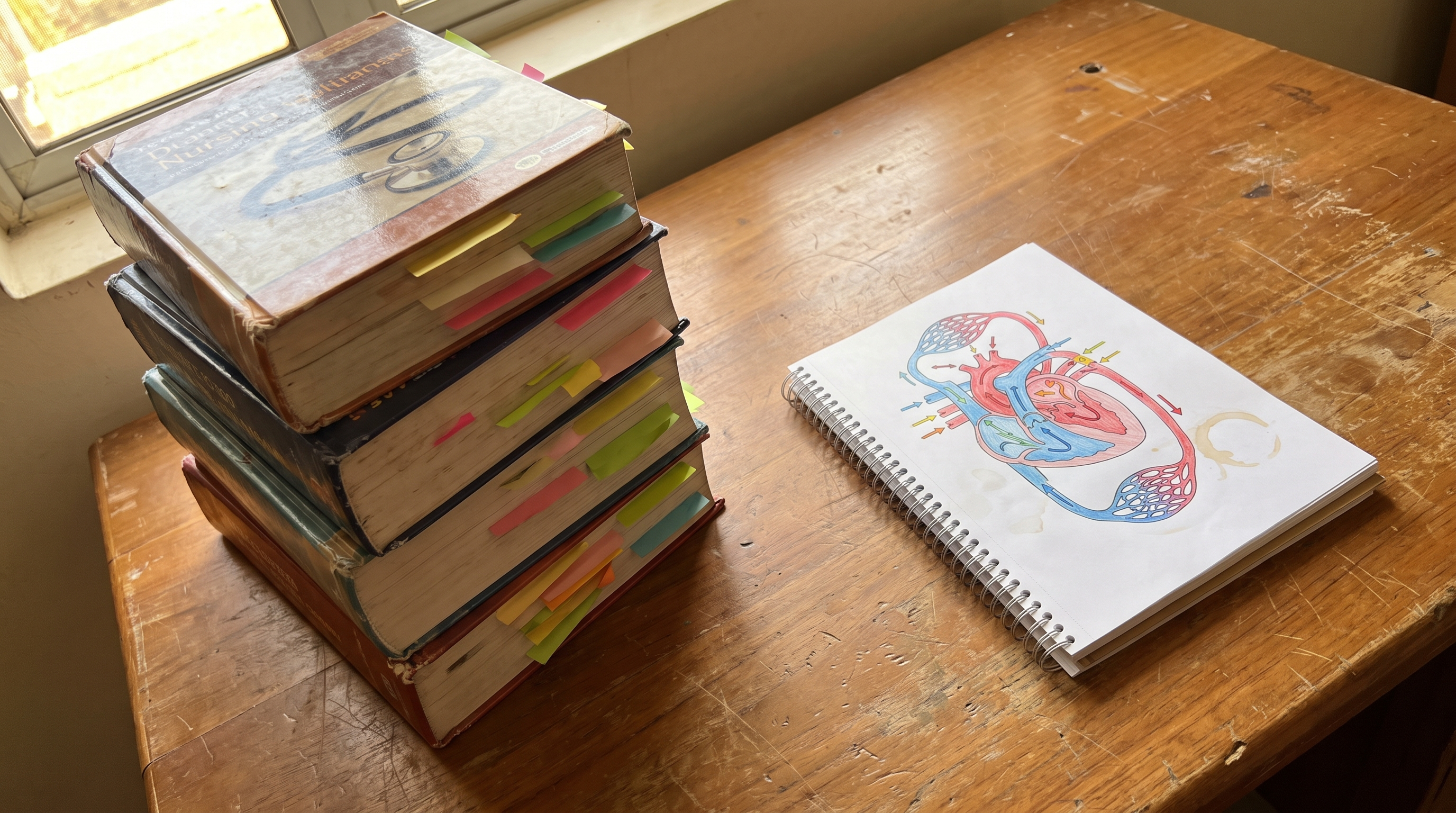
I have a shelf of textbooks that each cost real money and each was supposed to be the one. They all cover hemodynamics. Chapters on cardiac output, pages on preload and afterload, the whole thing. And none of them made it click. I could recite the definition of preload and still stand at a bedside at 2 AM with no idea what it was doing on the monitor in front of me.
After enough of that you start to wonder if the problem is you. If maybe some brains are built for this unit and yours just is not.
It was never a discipline problem. It was a format problem.
Here is what finally made sense to me. Everything that matters in the cardiac ICU, hemodynamics, Swan-Ganz numbers, shock, the devices, is visual. It is a pattern on a screen you have to recognize and understand in real time. But almost every resource teaches it in dense paragraphs.
You cannot turn a wall of text into bedside understanding by reading it harder. The words give you definitions. The bedside needs pictures. That gap between how the material is taught and how you actually have to use it is the real reason it never sticks, no matter how many hours you put in.
Once I understood that, the fix got a lot simpler than buying another textbook.
The thing that finally let me leave it at the door
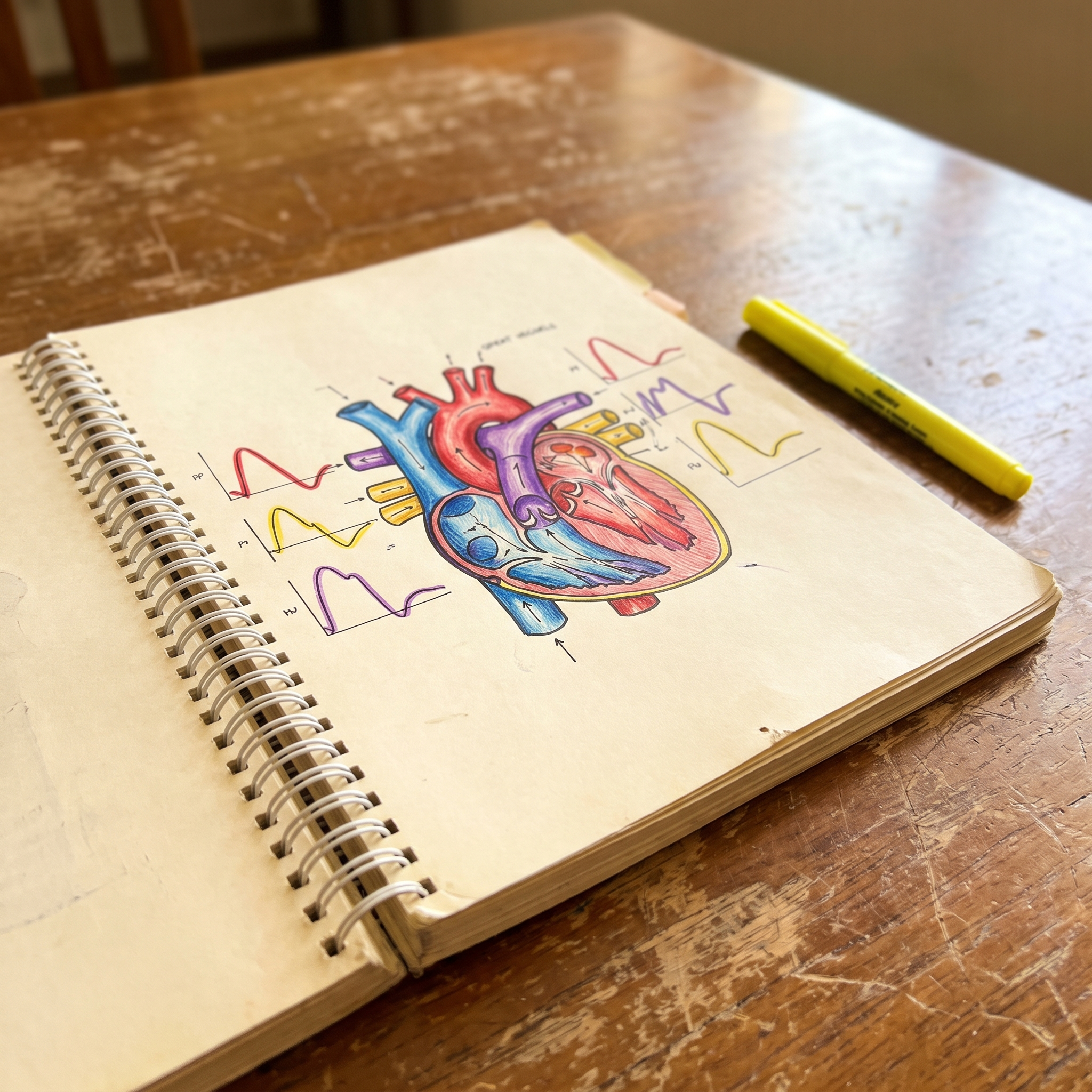
A nurse who had been on the unit for years handed me a thin spiral bound book and said she gives it to every new nurse who looks the way I looked. It is called A Visual Guide to Cardiac Critical Care, written by a cardiac surgery PA.
It worked when the textbooks did not for one simple reason. It is all visual. Every concept is drawn out so you can see the physiology instead of trying to decode it from a paragraph. The hemodynamics section made me stop and stare. Preload stopped being a definition and became a picture I could actually hold in my head, and the numbers on the monitor finally started to mean something.
It covers the things that actually keep new critical care nurses up at night: Swan-Ganz waveforms and interpretation, hemodynamics as a connected system, cardiogenic shock, IABP timing, Impella, ECMO and Harlequin syndrome, and EKG coronary territories. 55 color coded pages, thin enough to live in a scrub pocket.
See The GuideWhat changed once it clicked

The shift at work is only half of it. The bigger change was at home. When you actually understand what happened during your shift, your brain stops holding it hostage all night. The showers got shorter. The drive home stopped ending in the parking garage. I stopped bringing the textbook to the couch, because I did not need to cram anymore.
That is the part nobody tells you. Closing the knowledge gap does not just make you a better nurse on the unit. It gives you your life back off it.

No. It's built for exactly the point you're at: through orientation and the first year, when the concepts haven't clicked yet. It starts from the picture instead of assuming you already have it.
Those teach hemodynamics with paragraphs. This is all visual, drawn out so your eyes learn what to look for on a real tracing. It's the format most people are actually missing, not more of the same information.
Yes. It assumes you already know how to be a nurse and focuses on the cardiac piece: the hemodynamics, devices, and shock concepts that reset you to zero when you move into critical care.
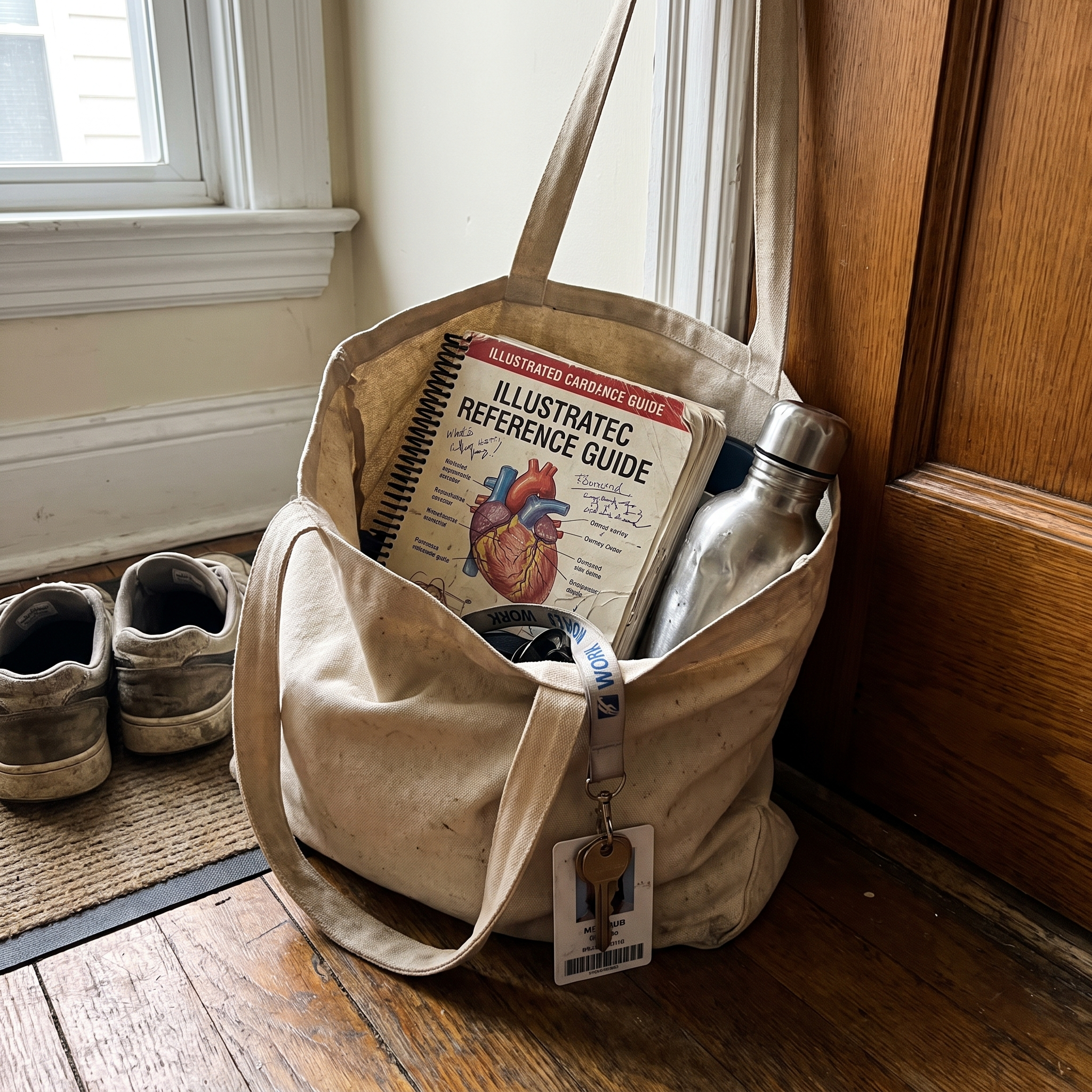
Spiral bound and physical, made to sit open on a counter or fold into a scrub pocket on shift.