
The Cardiac Devices That Terrify Every New CVICU Nurse (And How To Finally Feel Ready)
CVICU Survival · Real Talk
The Cardiac Devices That Terrify Every New CVICU Nurse (And How To Finally Feel Ready)
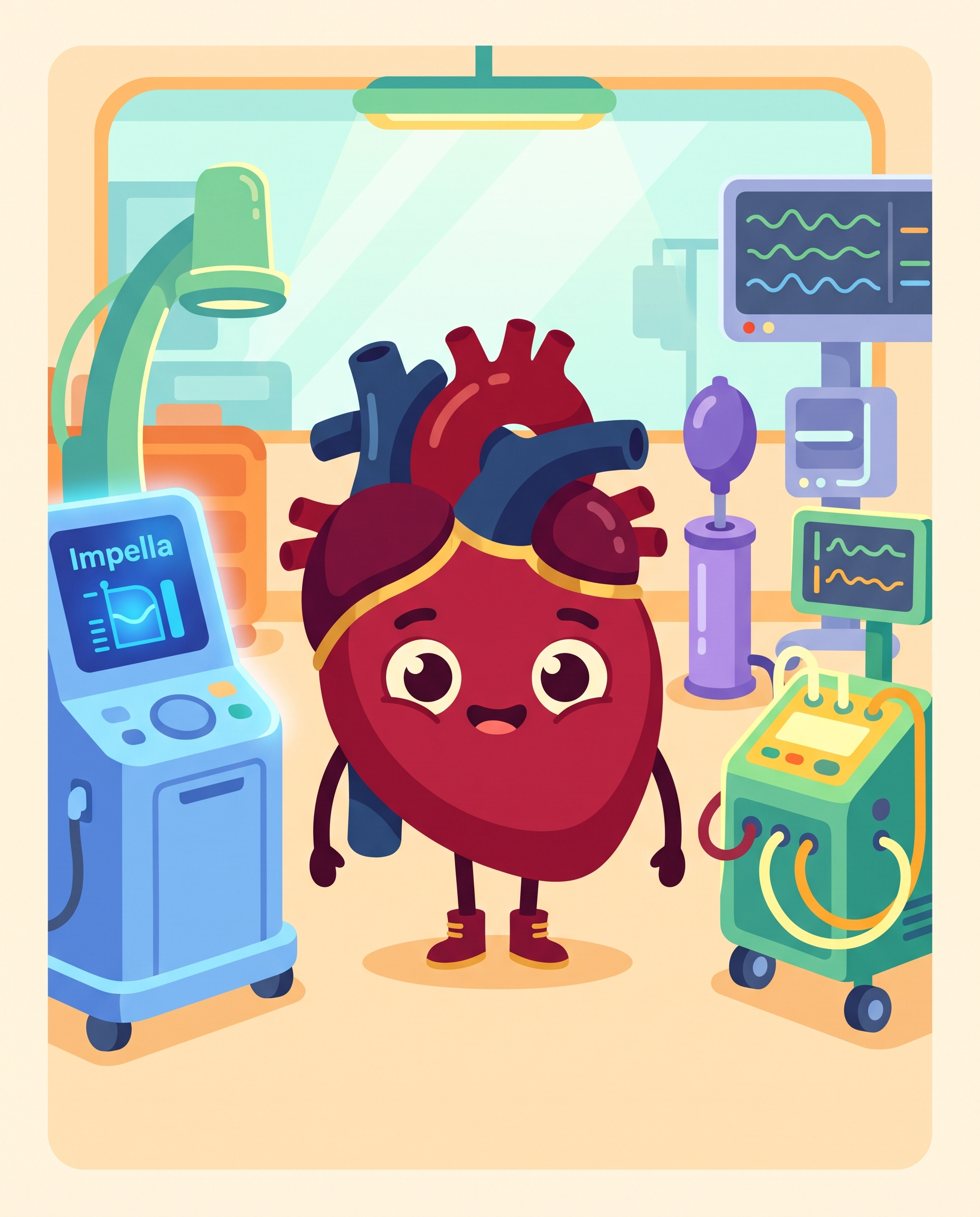
Nobody tells you this part. You pass your boards, you land the ICU job everyone said was impossible to get as a new grad, and then you walk onto the unit and realize you have no idea what half the machines beeping around your patient actually do.
Impella. Swan-Ganz. IABP. ECMO. CRRT. Balloon pumps, pacemakers, arterial lines. Everyone around you talks about them like they're obvious. They are not obvious. And the scariest part isn't looking dumb on rounds — it's the quiet fear that you'll miss something that actually matters.
1. The moment it hits you: you can't read the room
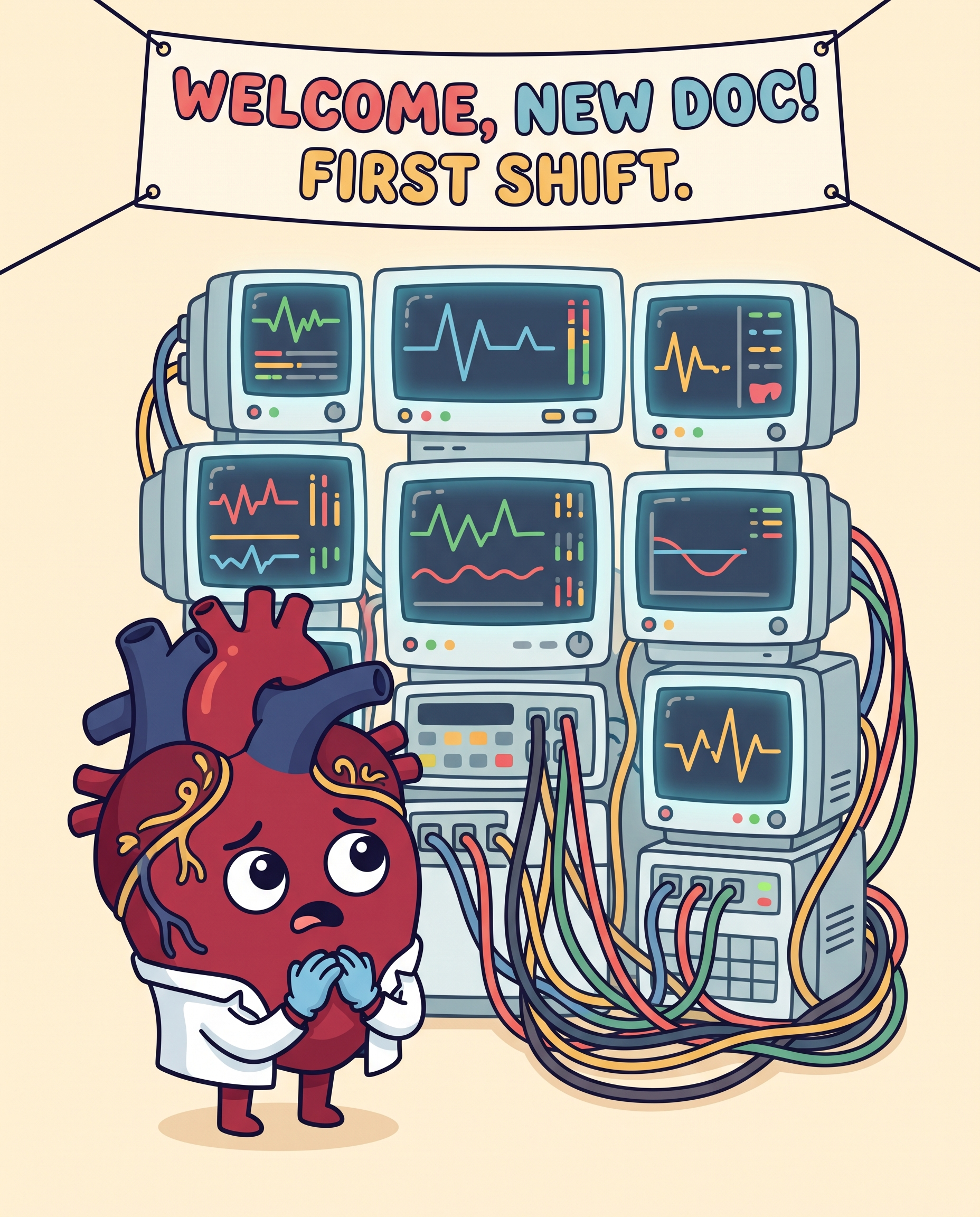
You're standing at the bedside and a preceptor asks, almost casually, “so what's that waveform telling you?” and your mind just goes white. It's not that you didn't study. It's that a wall of numbers and tracings is a completely different thing from a textbook diagram.
- An Impella console throws a suction alarm and you freeze because you're not sure if you turn it up or down.
- A Swan-Ganz waveform shifts and you can't tell if the catheter moved or the patient did.
- A balloon pump is timing wrong and it looks fine to you because you've never seen it look right.
- An ECMO patient is two different colors and nobody warned you that was even possible.
Every one of those is a normal day-one gap. The problem is nobody hands you a way to close it that actually sticks.
2. Why “just read the policy” never works
Here's what most new grads try: they go home and read the 40-page device manual. They watch a lecture. They make flashcards. And then a real alarm goes off and none of it comes back, because the manual taught them words, not recognition.
3. What actually changes it: seeing it, not memorizing it
The nurses who get comfortable fastest all describe the same click moment: the first time a device stopped being a scary black box and became a picture they could read at a glance. Suction alarm? They picture the underfilled ventricle. Dampened placement signal? They picture migration. Harlequin syndrome? They picture the split.
That's the whole game. Turn every intimidating device into a simple, visual, oh-that's-all-it-is picture — and the fear drops away because now you can actually see what's happening to your patient.
That's exactly why a cardiac surgery PA built A Visual Guide to Cardiac Critical Care: a spiral-bound, illustration-first reference that turns Impella waveforms, Swan-Ganz tracings, IABP timing, ECMO circuits, CRRT, and the rest into pictures you can recognize on shift — not paragraphs you'll forget.
4. What it feels like on the other side
Imagine the alarm going off and instead of your stomach dropping, you just look, recognize the pattern, and know your next move. That's not years away. That's what happens when the devices stop being mysteries.
- You stop dreading the assignment with the Impella or the balloon pump.
- You answer the preceptor's waveform question without the white-out panic.
- You catch the subtle change early — the whole reason you went into critical care.
- You feel like you actually belong on the unit.
5. You're not behind. You just need the right tool.
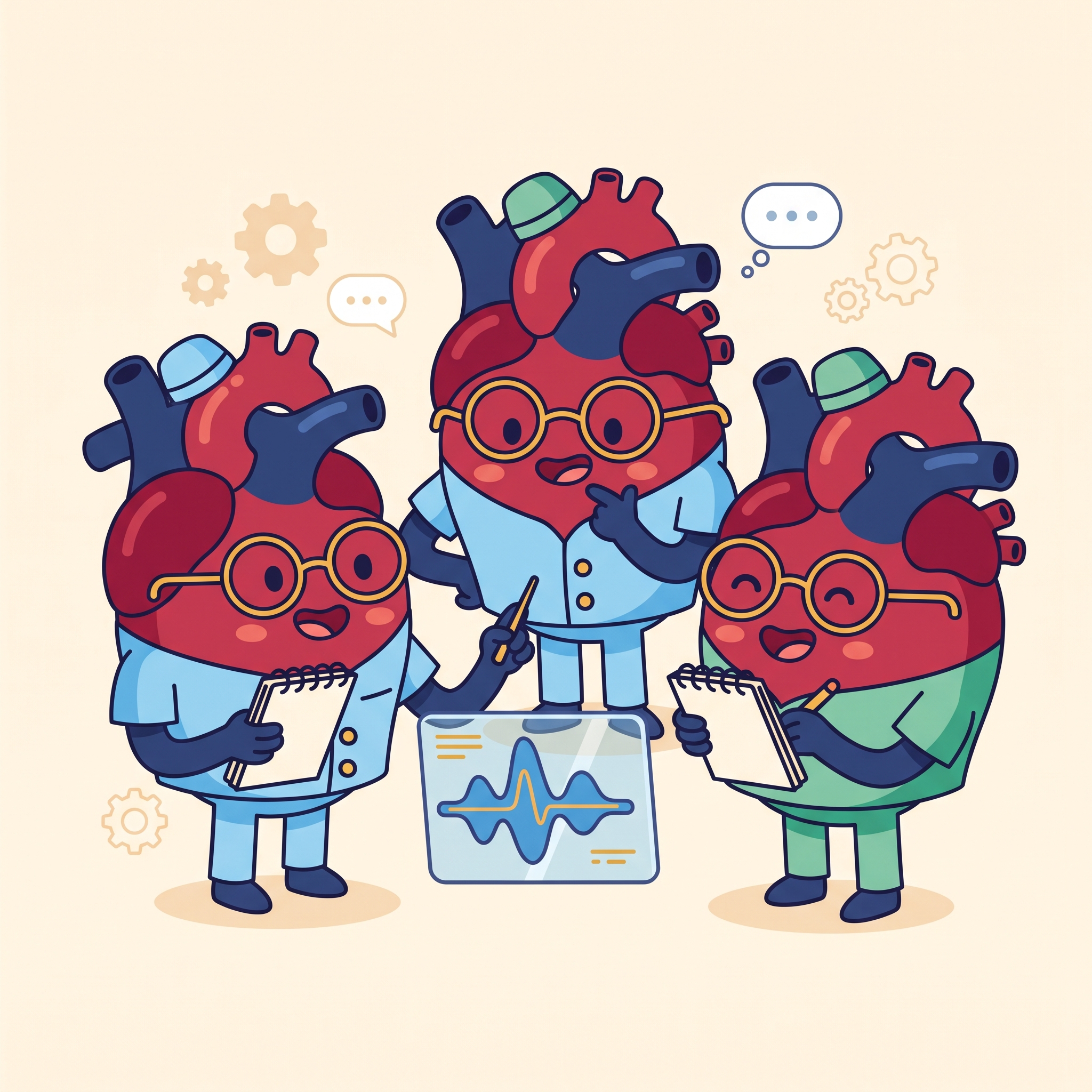
Feeling underprepared in the CVICU doesn't mean you chose the wrong specialty. It means you were handed the hardest devices in the hospital and told to figure them out from walls of text. A visual learner never stood a chance with that approach.
If you'd rather see how these devices work than read another dense chapter, this is the resource that finally makes it click.
Get the visual guide →Common questions
Is this only for brand-new grads?
No. It's built for anyone new to cardiac critical care — new grads, nurses transferring in from another unit, or anyone who wants a fast visual refresher on the devices they don't touch every day.
Does it actually cover the scary devices?
Yes — Impella, Swan-Ganz, IABP, ECMO and Harlequin syndrome, CRRT, arterial lines, VADs, and pacing, all explained through illustrations instead of walls of text.
Why visual instead of a normal textbook?
Because on shift you recognize a waveform or a color — you don't recite a definition. The guide trains the recognition, which is what actually keeps patients safe.
What format is it?
A spiral-bound printed reference you can keep at the bedside, written by a cardiac surgery PA-C.