
The Part of Starting in a Cardiac ICU Nobody Warns You About
The Part of Starting in a Cardiac ICU Nobody Warns You About (And the Simple Fix That Finally Made It Click)


The hardest part of starting in a cardiac ICU isn't the hours, and it isn't the codes. It's the quiet gap between what you learned in school and what you actually need to know at the bedside, and how quickly you get good at hiding it.
Nobody really warns you about that part. You passed your boards. You wanted critical care. And then you get on the unit and realize that knowing the definition of something and knowing what to do with it at 3 AM are two completely different things.
If that is where you are right now, you are not behind and you are not the only one. It is one of the most common things new critical care nurses feel, and almost none of them say it out loud.
It shows up in small ways before you ever say it out loud
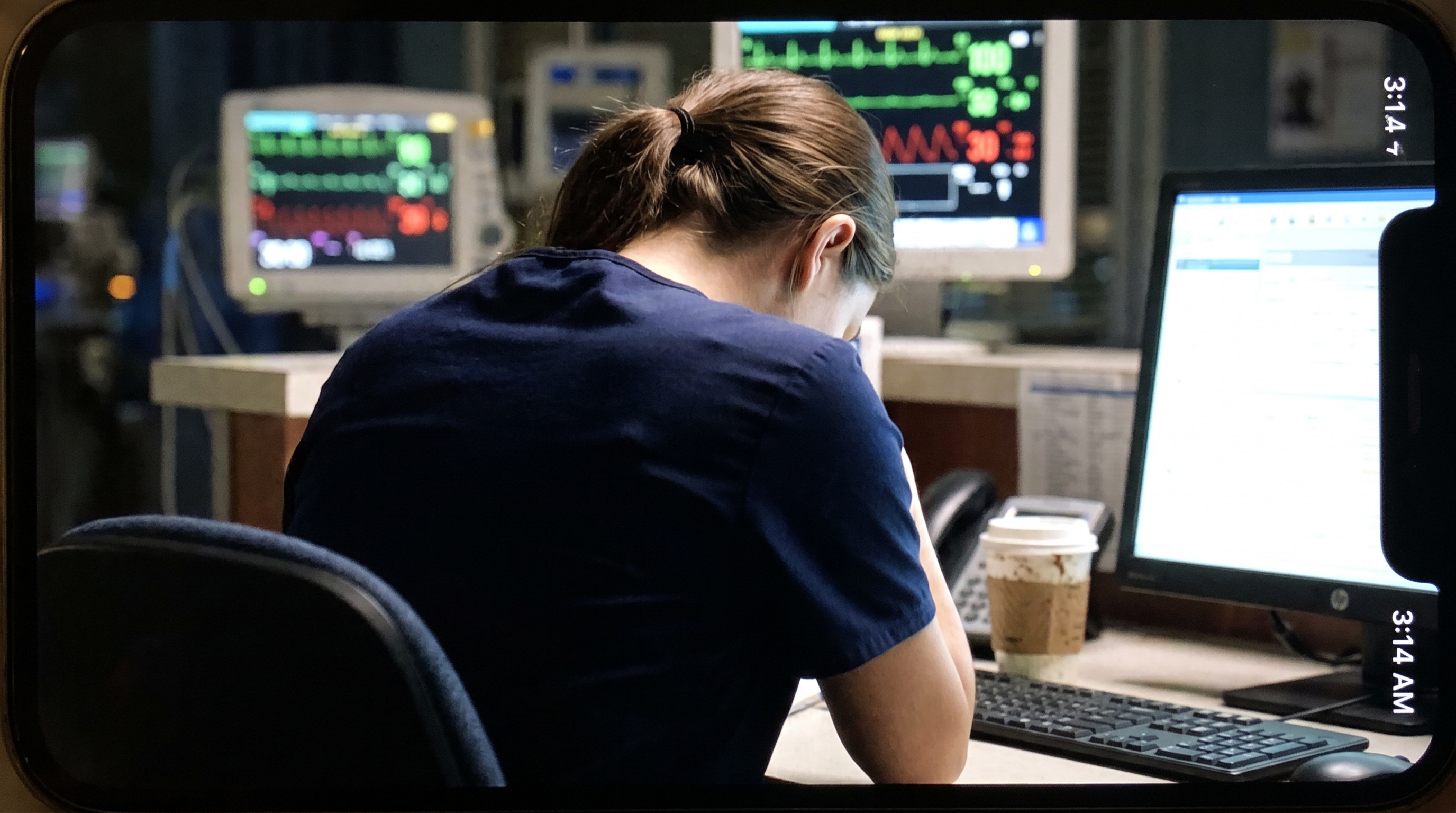
For most people it does not announce itself. It just leaks into the day. You catch yourself standing at the monitor a beat too long, not quite sure if what you are looking at is fine or the start of a problem. You dread giving report a little, because if someone asks why a drip was titrated, you are not totally sure you can explain it.
Maybe you find yourself skipping breaks you are allowed to take, because walking away from the bedside feels risky when you do not fully trust your read on the patient. Maybe you have a spot on the unit, the supply room, the stairwell, where you go for a couple of minutes just to not be asked a question.
None of that means you are a bad nurse. It means you are carrying a gap nobody has helped you close yet, and the weight of it is real.
Here is the part almost nobody figures out on their own
You have probably tried to fix it the obvious way. Read the textbook. Watch the videos. Make the flashcards. Show up to every optional in-service. And it sort of works, for about 48 hours, until the first time a patient's numbers move and the information you crammed just is not there when you reach for it.
That is not a discipline problem. It is a format problem. Hemodynamics, Swan-Ganz numbers, shock, the devices, all of it is taught to most of us in dense paragraphs. But at the bedside you have to see it. You have to recognize a pattern on a screen and know what it means. Paragraphs do not build that. Pictures do.
That gap between how the material is taught and how you actually have to use it is the real reason it never fully clicks. And once you understand that, the fix gets a lot simpler than studying harder.
The thing that finally made it click
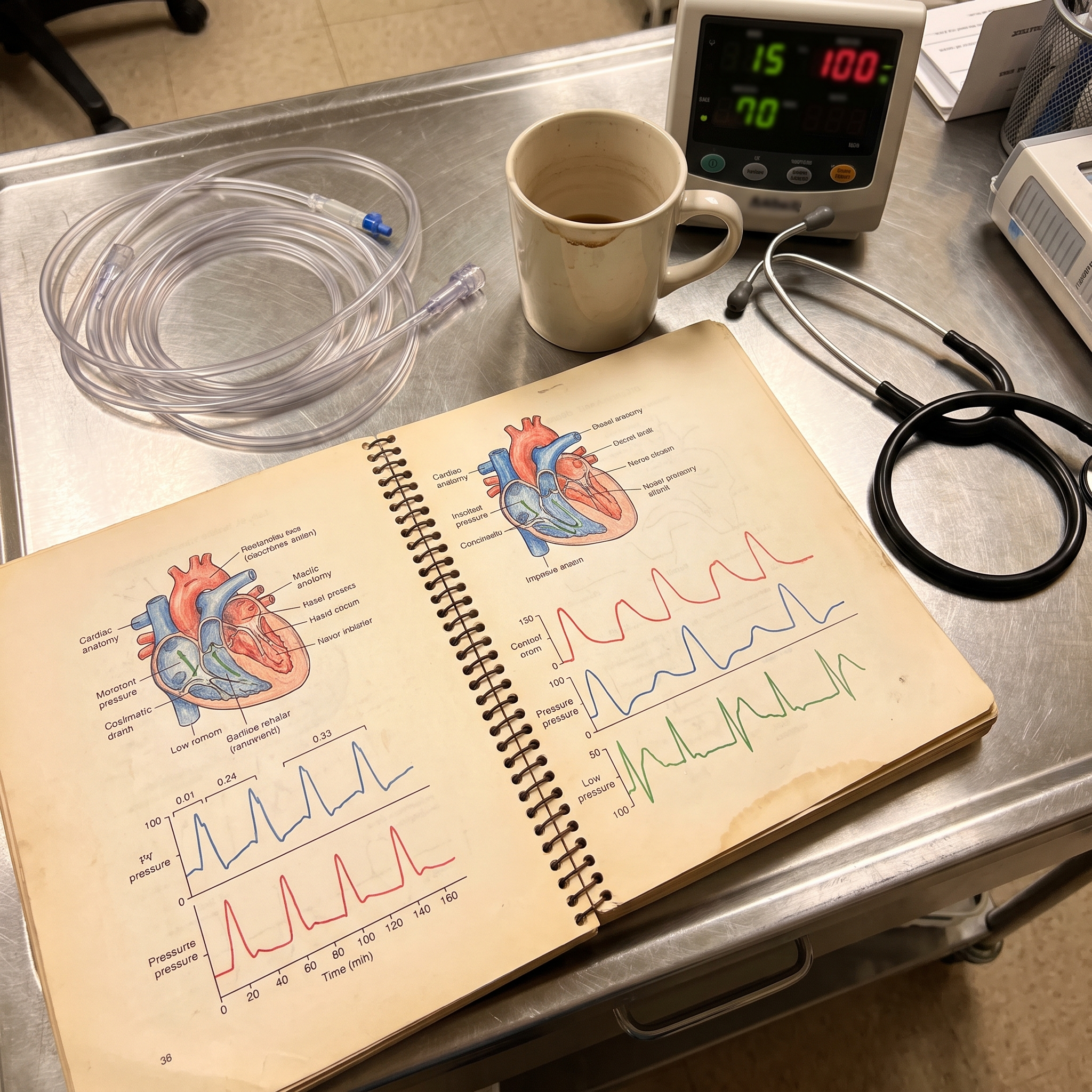
A nurse who had been on the unit for years handed me a spiral bound book and said she gives it to every new nurse who looks the way I looked. It is called A Visual Guide to Cardiac Critical Care, written by a cardiac surgery PA.
It worked when the textbook did not for one simple reason. It is all visual. Every concept is drawn out so you can see the physiology instead of trying to decode it from a wall of text. Preload stopped being a definition and became a picture I could actually hold in my head. The numbers on the monitor started to mean something.
It covers the things that actually keep new critical care nurses up at night: Swan-Ganz waveforms and interpretation, hemodynamics as a connected system, cardiogenic shock, IABP timing, Impella, ECMO and Harlequin syndrome, and EKG coronary territories. 55 color coded pages, built to sit in a scrub pocket.
See The GuideWhy seeing it beats memorizing it
Once the concepts are visual, the rest of the shift changes. You walk into an in-service already understanding the foundation, so it reinforces instead of overwhelms. You can look at a tracing and actually read it. And when someone asks you why, you explain it instead of reading nervously off your brain sheet.
That is the difference between surviving your orientation and starting to feel like you belong on the unit. Not more hours of studying. A format your brain can actually hold onto.
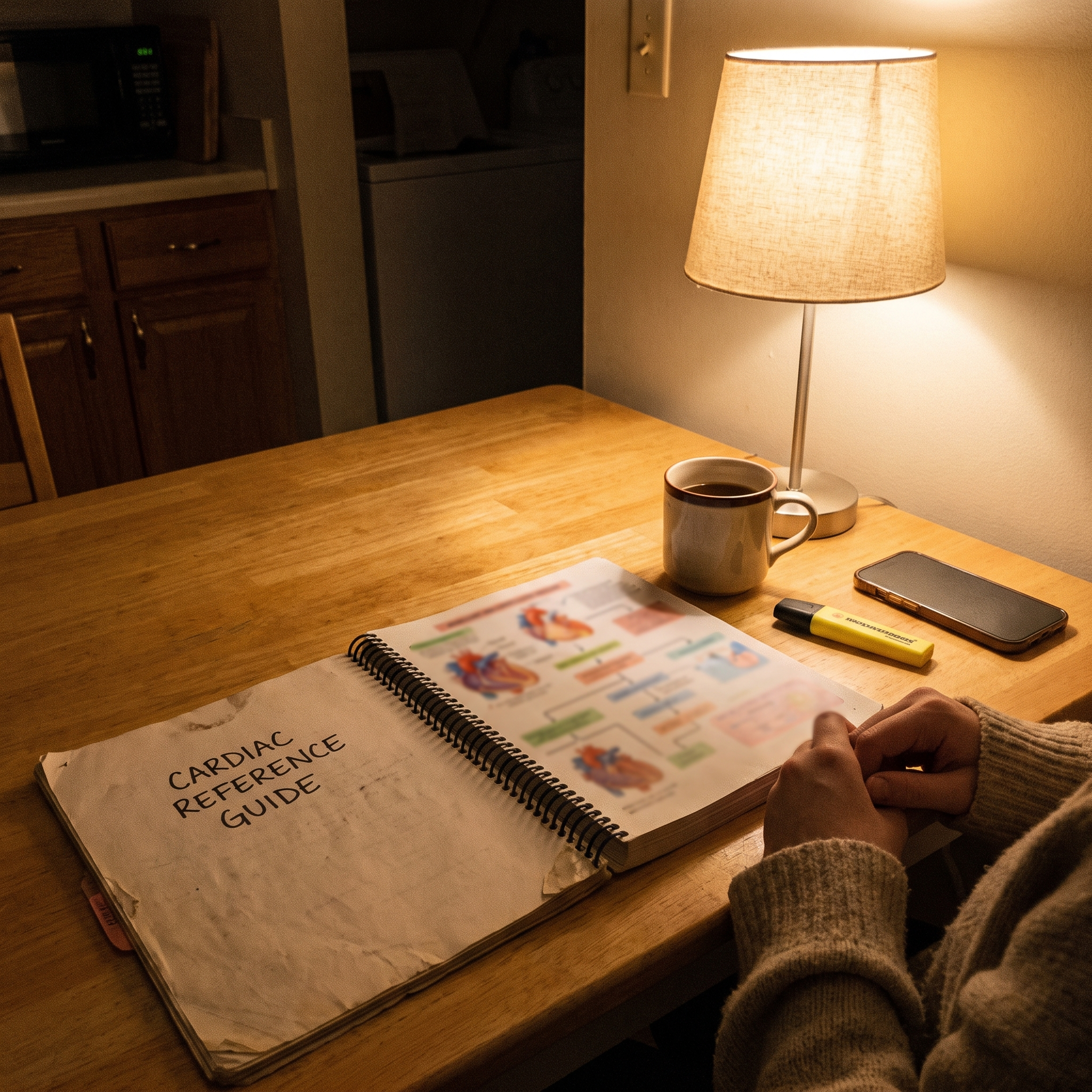

No. It's built for exactly the point you're at: through orientation and the first year, when the concepts haven't clicked yet. It starts from the picture instead of assuming you already have it.
Those teach hemodynamics with paragraphs. This is all visual, drawn out so your eyes learn what to look for on a real tracing. It's the format most people are actually missing, not more of the same information.
Swan-Ganz interpretation, hemodynamics, cardiogenic shock, IABP timing, Impella and ECMO including Harlequin syndrome, EKG coronary territories, and preload and afterload as a connected system. 55 color coded pages.
Spiral bound and physical, made to sit open on a counter or fold into a scrub pocket on shift.