
5 Signs a New Nurse Is About to Quit the Cardiac ICU. I Was All 5.
5 Signs a New Nurse Is About to Quit the Cardiac ICU. I Was All 5.


I got hired into the cardiac ICU straight out of school. Everyone told me how lucky I was.
A few months in, I almost walked away from it.
Not because I was lazy. Not because I didn't care. I cared so much it was eating me alive. I just couldn't make any of it make sense, and I was sure I was the only one.
I wasn't. Looking back, there were five signs I was about to quit. If you're new and you see yourself in more than two of these, please read to the end before you decide anything.
You Write Everything Down and Understand None of It
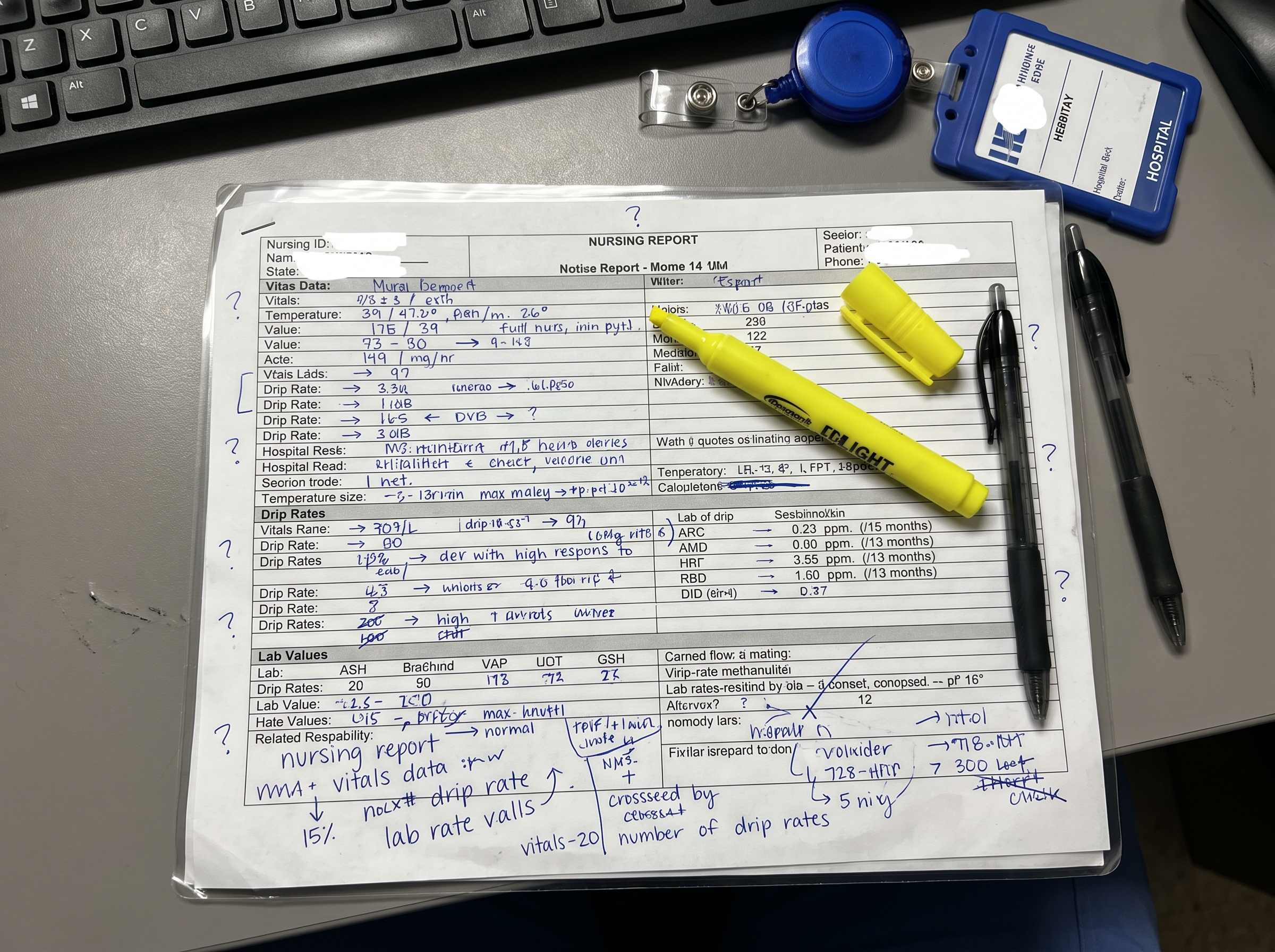
Every number. Every drip rate. Every pressure. Written down, crossed out, written again.
From the outside it looks like you're being careful. On the inside you know the truth. Writing the numbers down is the only thing you know how to do with them.
You can tell someone the CVP. You just can't tell them what it means for the patient in front of you. And every time a number changes, you know you're supposed to do something, but you're not sure what or why.
You've Gotten Really Good at Nodding

Your preceptor explains a waveform. You nod. The fellow asks you something on rounds. You nod and say you'll find out. The other new grads talk about their balloon pump patient on break. You nod and laugh at the right spots.
At some point you stop asking questions, because every question feels like proof of how far behind you are.
The pretending is more exhausting than the actual work. And the longer it goes on, the harder it is to admit you never understood it in the first place.
You Work a Second Shift in Your Head Every Night
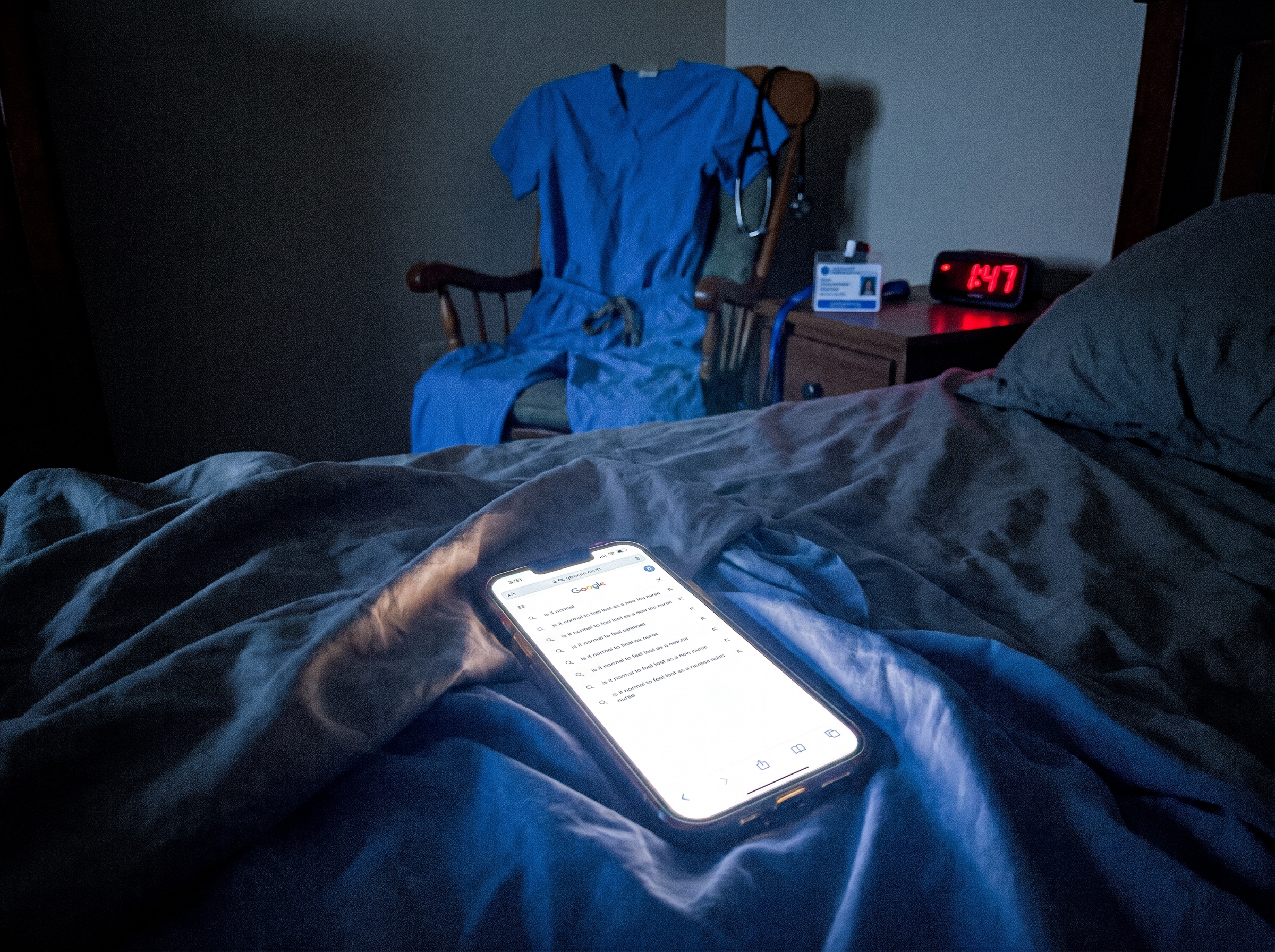
You get home after a twelve and the shift doesn't end. You replay the drip you titrated. The question you couldn't answer. The number you charted and weren't sure about.
Then it's 2am and you're searching things like whether it's normal to feel this lost as a new ICU nurse, reading threads from people who quit.
Maybe you stop eating dinner like you used to. Maybe you sit in your car before shift trying to breathe. None of that means you're weak. It means you're carrying the whole unit home with no way to put it down.
See What Changed It for Me →You're Looking at Other Units Just to See

Step down. PACU. A clinic somewhere. You tell yourself you're just curious.
You're not just curious.
Maybe you've called in once or twice when you weren't sick. Maybe there's a transfer email sitting in your drafts. You keep telling yourself you'll decide after one more rough week.
If that's where you are, I get it. I was there. But the unit might not be the problem. The way you were taught it might be.
You Believe Everyone Else Just Gets It
This was the big one for me.
Everyone else understands this and I'm pretending.
Here's what I found out later. The other new nurses in my cohort were telling our preceptors the exact same thing. Almost word for word. Nobody just gets the cardiac ICU at twelve weeks. Some people are just better at hiding it.
It's the steepest learning curve in the hospital. Hemodynamics, balloon pumps, Impella, ECMO, pressors, fresh post-op hearts. And most of it gets explained to you out loud, once, in the middle of a busy shift. Of course it doesn't stick.
I Didn't Need to Study Harder. I Needed to See It.
I tried everything first. Flashcards. Videos at 2x speed. A giant critical care textbook I opened maybe twice.
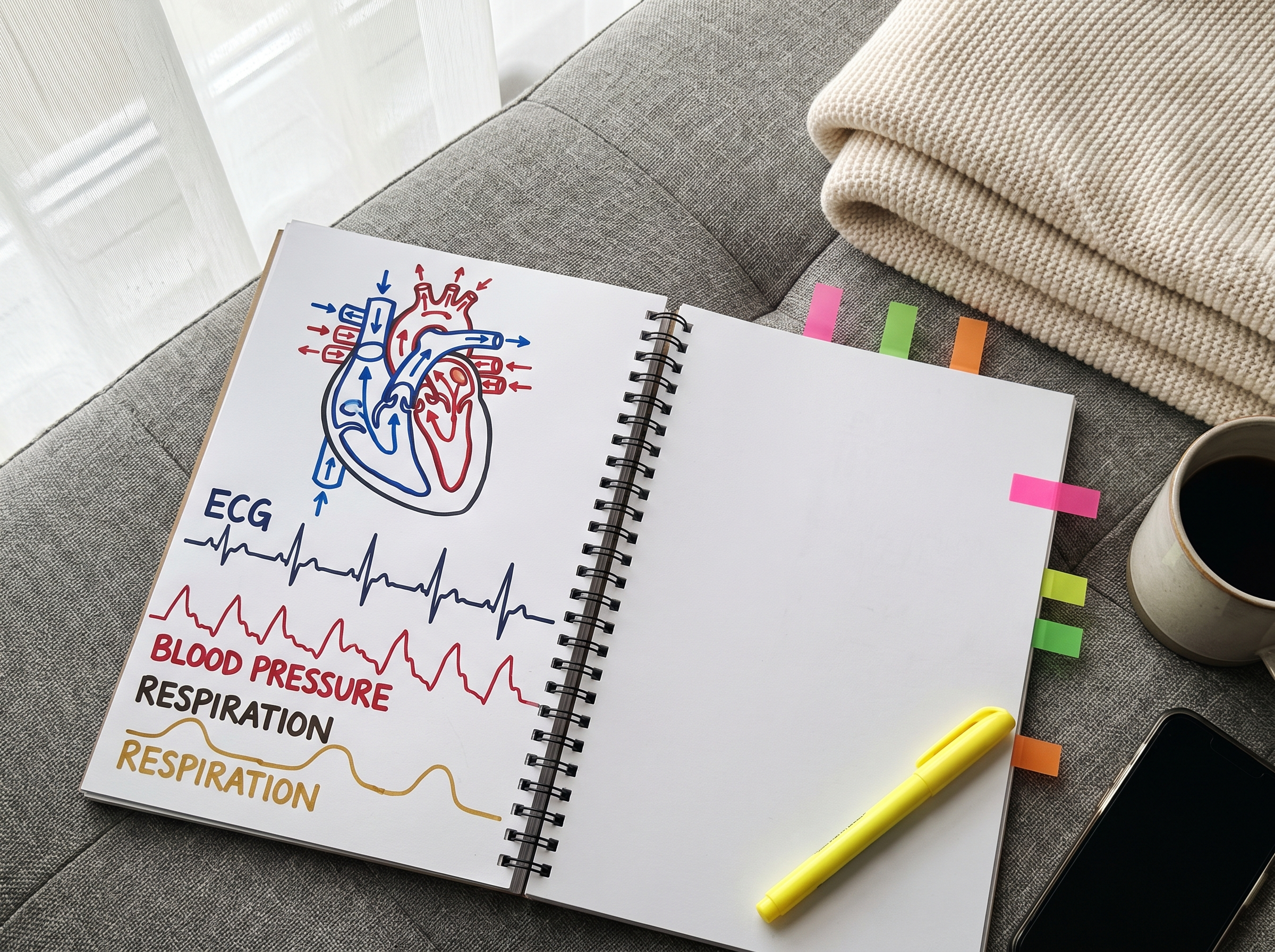
What finally worked was the book my preceptor handed me right when I was ready to leave. It's called A Visual Guide to Cardiac Critical Care, written by a cardiac surgery PA-C. About 55 pages of color-coded diagrams. Swan-Ganz. Hemodynamics. Shock. Balloon pumps. Impella. ECMO. LVADs. Pressors.
No walls of text. Every concept drawn out so you can see how it fits together instead of trying to memorize words about it.
I read it twice that night. For the first time I actually understood preload. Not memorized it. Understood it. My first thought was, why didn't anyone show me it like this at the beginning?
It didn't do the work for me. I still had to show up and learn. But it gave me something my brain could hold onto, and that was enough to make me stay.
Get the Visual Guide →You're Probably Not the Problem. The Format Is.
If you saw yourself in this list, you're not a bad nurse. The nurses who feel this the hardest are usually the ones who care the most.
Before you send that email or pick up that other unit, give yourself one real chance to see it the right way.
And if you precept someone who's gone quiet, get this for her. She might be closer to leaving than you think.
A Visual Guide to Cardiac Critical Care
 Grab a Copy →
Yes. If you're in orientation or your first year in cardiac critical care and the concepts aren't sticking, it was made for exactly where you are.
Yes. A lot of preceptors buy a copy for each new orientee. It's built to be handed off.
No. It sits alongside orientation and gives you a visual reference for the concepts your program is already teaching.
Yes. Balloon pumps, Impella, VA and VV ECMO, LVADs, hemodynamics, Swan-Ganz, shock and pressors are all covered visually.
Yes. The hemodynamics, drips and mechanical support content applies across cardiac critical care units.
You're covered by a 30-day money-back guarantee. If it doesn't click, reach out and we'll make it right.